The Elven Tree Fort
Elven tree forts and watchtowers are built in a very unusual way, that has more to do with gardening and growing than building.
Through nice words, magic, music or a mix of these, the elven folk manages to create structures out of the vegetation itself, in a process that can take multiple lifetimes of a mortal or overnight, depending on the haste they find themselves in. Through means only understood by elves themselves, they convince the plants to be their allies and grow in a particular form and configuration, and that results in self-maintaining “buildings” that differ only slightly from its surroundings.
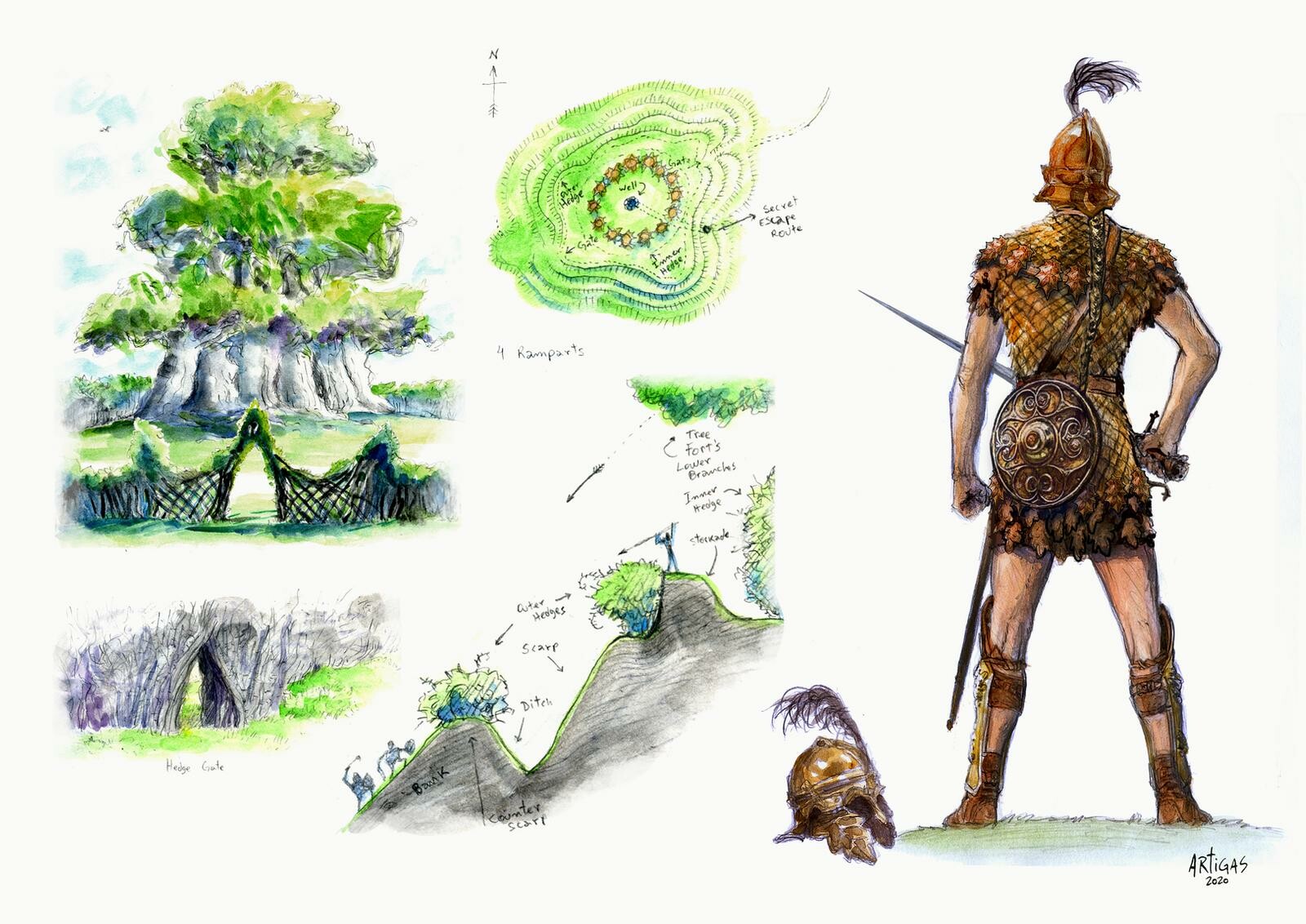
The fort here depicted represents the elven equivalent of an Iron age hill fort, having moats and walls made of dirt and reinforced with thick thorny hedges and a mass of roots for structural strength.
Each level of the fort consists of intertwined branches that form a level floor, cushioned by a thick layer of leaves the tree itself supplies and replenishes. At the centre a well is dug, and it serves practical, religious/magical and strategic purposes. It is a source of fresh water, it connects with underground running water and therefore has magical energies flowing through it, and also serves as a secret escape route, through a lateral tunnel dug on its walls and through which an elf could crawl to safety as a last resort.
These forts and their smaller watchtower counterparts are spread evenly through the elves’ territories, and always within sight (elven sight) of each other, in a way they overlook the whole land. The forts can communicate among themselves with the help of loyal birds that are usually lifelong companions to the elves they serve.
The elven warrior depicted is wearing an autumnal set of Orichalcum armour and carries a Rapier-type of sword and an Orichalcum buckler. Those are only side arms and his main weapon would either be a bow or a spear.